
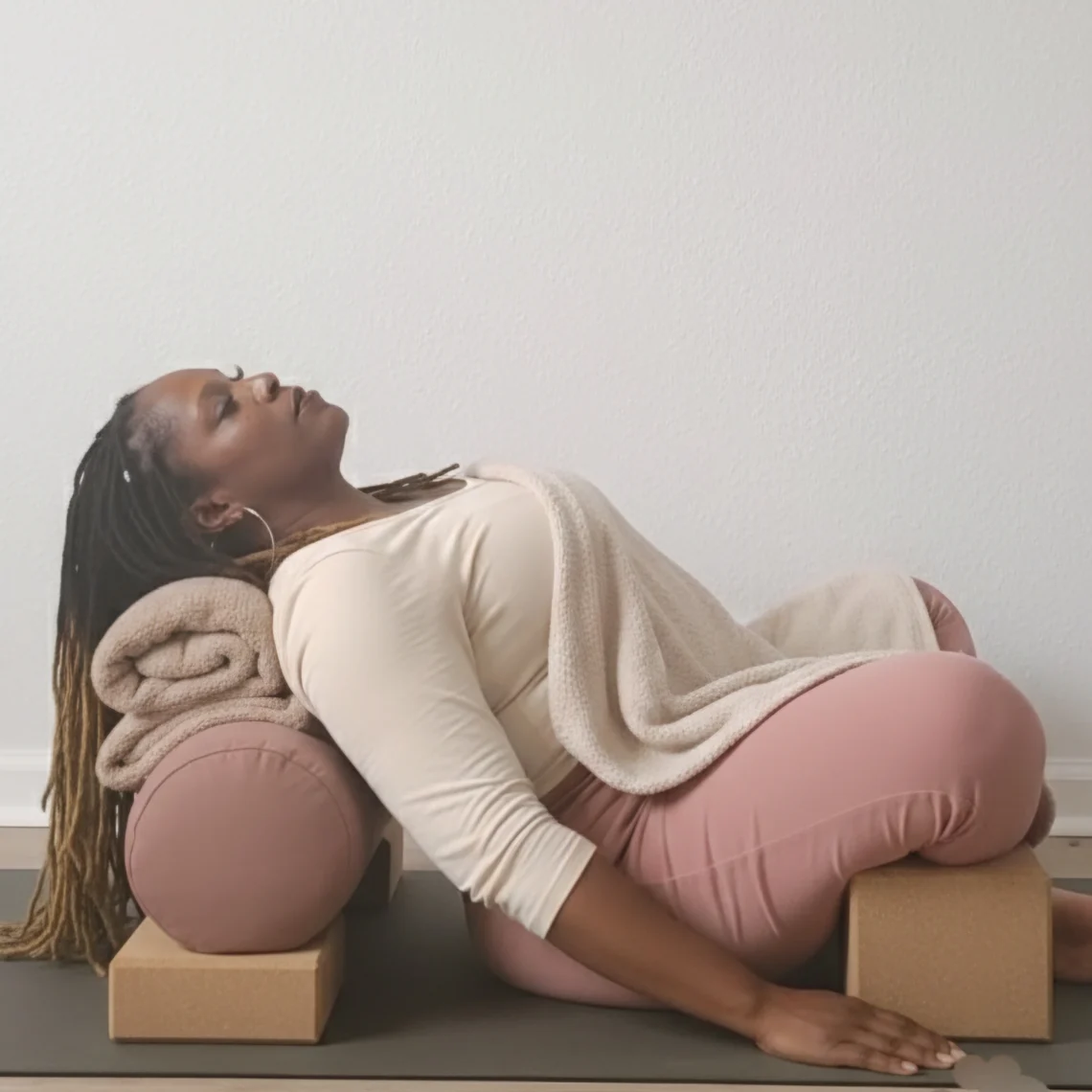
Why Restorative Yoga + Breath Work Matter
Rest is not something we earn after we have done everything on our to-do list. Rest is a necessary part of caring for our mind, body, and nervous system.
Restorative yoga combines gentle supported poses with intentional breathing to encourage the body to slow down, release tension, and move from a state of stress and survival into a state of relaxation and restoration.
When we intentionally create moments of stillness, we give ourselves permission to pause, breathe, and reconnect with ourselves. Incorporating restorative yoga and breath work into your self-care routine can support emotional balance, reduce stress, improve relaxation, and create space for healing.
I care about you so much that I decided to create a simple guide, showcasing some very beginner-friendly supported poses for you to practice in your most comfortable space.
Begin With Breath Work
Before moving into the poses, invite participants to settle in.
“Find a comfortable seated position or lie down. Allow your shoulders to soften. Relax your jaw. Place one hand over your heart and one hand over your belly if that feels comfortable. Begin to notice your natural breath.”
4-Count Breath
Inhale for 4 counts (through the nose)
1…2…3…4
HOLD
Exhale for 4 counts (through the mouth)
1…2…3…4
Benefits:
- Helps bring awareness to the breath
- Encourages relaxation
- Creates a sense of grounding
5-Count Breath
Inhale for 5 counts (through the nose)
1…2…3…4…5
HOLD
Exhale for 5 counts (through the mouth)
1…2…3…4…5
Benefits:
- Supports a slower breathing rhythm
- Helps calm the mind
- Encourages presence in the moment
6-Count Breath
Inhale for 6 counts (through the nose)
1…2…3…4…5…6
HOLD
Exhale for 6 counts (through the mouth)
1…2…3…4…5…6
Benefits:
- Encourages deeper relaxation
- Supports nervous system regulation
- Helps release physical tension
Restorative Yoga Sequence
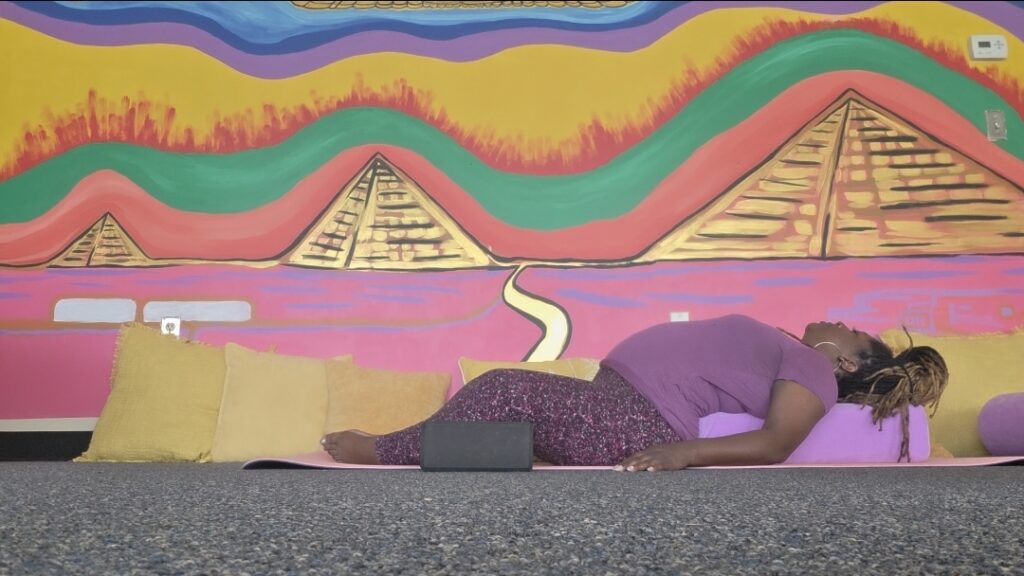
Supported Reclined Bound Angle Pose
Set Up:
Place your bolster lengthwise behind you. Sit at the base of the bolster and slowly recline back. Bring the soles of your feet together and allow your knees to open comfortably. Use blocks or blankets under your knees for extra support.
Hold:
5–10 minutes
Benefits:
- Opens the chest and hips gently
- Encourages deeper breathing
- Helps release tension held in the body
- Promotes relaxation and rest
Mindful Prompt:
Allow yourself to be supported. You do not have to hold everything together in this moment.
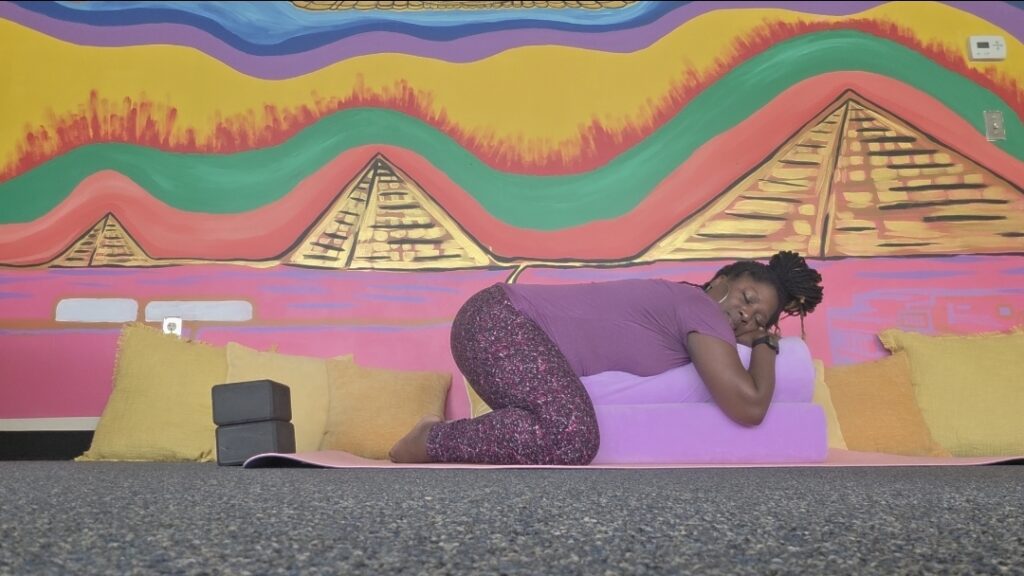
Supported Child’s Pose
Set Up:
Place your bolster vertically or horizontally in front of you. Bring your knees wide or together, depending on what feels comfortable. Fold forward and rest your torso on the bolster. Turn your head to one side and switch halfway through.
Hold:
5–10 minutes
Benefits:
- Creates a feeling of safety and grounding
- Releases tension in the back, shoulders, and neck
- Encourages inward reflection
- Supports relaxation
Mindful Prompt:
Give yourself permission to slow down. You are allowed to receive care.
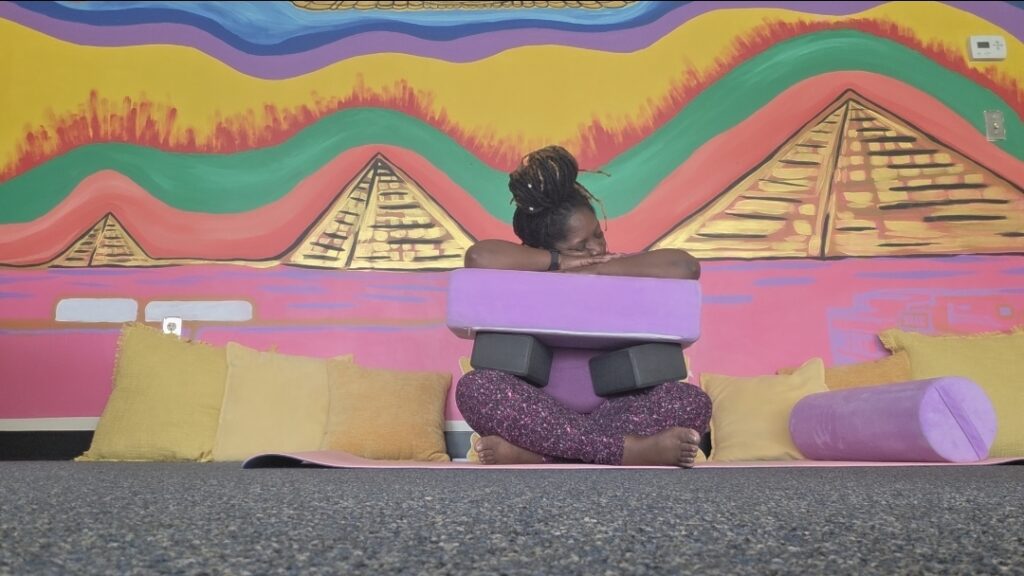
Supported Forward Fold
Set Up:
Sit comfortably with your legs extended or gently bent. Place your bolster across your legs and fold forward, allowing your upper body to completely rest on the support.
Hold:
3–5 minutes
Benefits:
- Calms the mind
- Releases tension in the spine
- Encourages a quiet, reflective state
- Provides gentle stretching without strain
Mindful Prompt:
Release the need to rush. Rest is productive too.
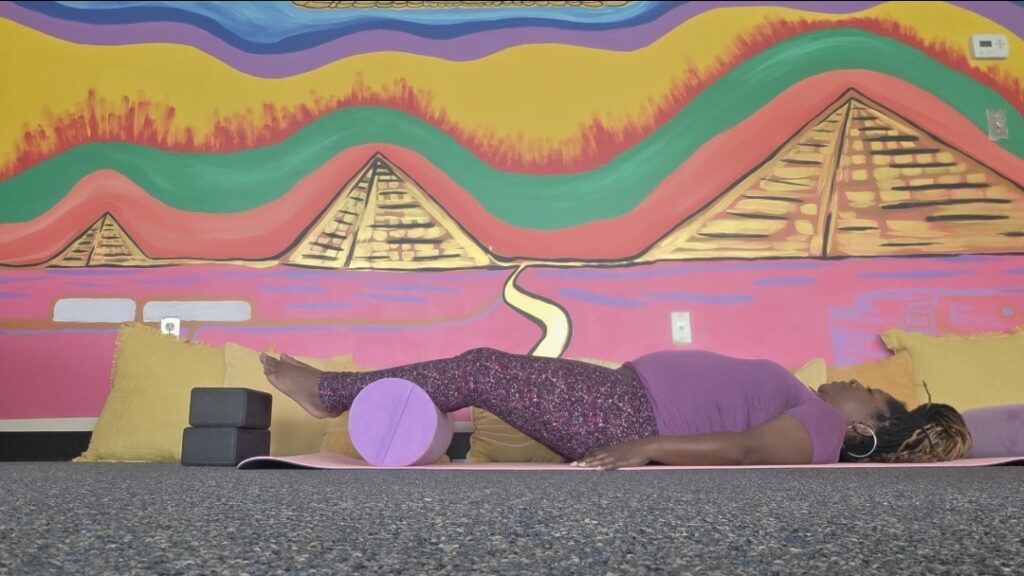
Savasana (Final Rest)
Set Up:
Lie on your back with your legs extended or knees supported by a bolster. Allow your arms to rest comfortably by your sides with palms facing upward.
Hold:
5–10 minutes
Benefits:
- Allows the body to integrate the practice
- Supports deep relaxation
- Creates space for stillness and awareness
- Encourages complete rest
Closing Prompt:
Take a moment to acknowledge yourself for creating this space. Carry this feeling of calm and restoration with you.
As you complete this practice, remember that rest is not a luxury, it is a form of care. In a world that often asks us to constantly push, produce, and pour into others, restorative yoga gives us permission to pause and reconnect with ourselves.
For many of us, especially within the Black community, rest has historically been complicated. We have often carried the weight of responsibility, resilience, and showing up for others. Creating intentional moments of stillness allows us to honor our bodies, listen to what we need, and embrace the healing that comes from slowing down.
May this practice remind you that you deserve moments of peace, softness, and restoration. Your body deserves care. Your breath deserves attention. And your rest is worthy of being protected.